
How to Choose the Right Lighting for Your Space
Lighting is one of the most important elements in home design. It affects how a room looks, how comfortable it feels, and how well it
Lighting is one of the most important elements in home design. It affects how a room looks, how comfortable it feels, and how well it functions throughout the day. The right lighting can make a small room feel larger, create a relaxing atmosphere, highlight decorative features, and make everyday tasks easier. Poor lighting, on the other hand, can make even a beautifully decorated space feel dull, uncomfortable, or impractical.
Choosing lighting involves more than finding an attractive fixture. You also need to consider the size of the room, how the space is used, the amount of natural light available, and the mood you want to create. By combining different types of lighting and selecting fixtures that suit your décor, you can create a home that feels balanced, welcoming, and functional.
Understand the Three Main Types of Lighting
A well-lit room usually includes three main types of lighting: ambient, task, and accent lighting. Each type serves a different purpose, and combining them creates a more complete lighting plan.
Ambient lighting is the main source of general illumination in a room. It allows you to move around safely and comfortably. Ceiling lights, chandeliers, recessed fixtures, and large floor lamps are common sources of ambient lighting.
Task lighting provides focused illumination for specific activities. Desk lamps, reading lights, under-cabinet lighting, and bathroom vanity lights are examples of task lighting. This type of lighting should be bright enough to reduce eye strain without creating uncomfortable glare.
Accent lighting is used to highlight decorative or architectural features. It can draw attention to artwork, plants, shelving, textured walls, or display cabinets. Picture lights, wall sconces, spotlights, and small decorative lamps can all serve as accent lighting.
Using all three types creates depth and flexibility. Instead of relying on one bright ceiling fixture, layered lighting allows you to adjust the atmosphere based on the time of day and activity.
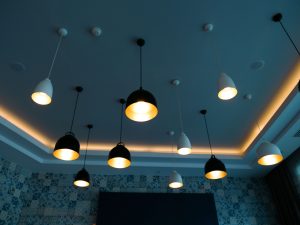
Consider How the Room Will Be Used
Before choosing fixtures, think about the main activities that take place in the room. A kitchen requires different lighting from a bedroom, while a home office needs a different setup from a dining room.
In living rooms, lighting should support conversation, reading, television viewing, and relaxation. A ceiling fixture can provide general light, while table lamps and floor lamps create softer areas of illumination.
Kitchens need bright, practical lighting. Overhead fixtures can illuminate the room, but additional task lighting is often needed above countertops, sinks, and cooking areas. Under cabinet lights can help reduce shadows and make food preparation easier.
Bedrooms should feel calm and comfortable. Soft overhead lighting, bedside lamps, and dimmable fixtures work well. Reading lamps should be placed where they provide focused light without disturbing someone on the other side of the bed.
Home offices require bright, even lighting to support concentration. A desk lamp can provide direct task lighting, while ambient lighting reduces contrast and prevents eye strain.
Understanding the purpose of the room helps you select lighting that improves both comfort and function.
Evaluate the Natural Light
Natural light should be considered when planning artificial lighting. Pay attention to how much sunlight enters the room and how the light changes throughout the day.
Rooms with large windows may feel bright during the morning or afternoon but need more illumination at night. Rooms with limited windows, dark walls, or shaded locations may require stronger ambient lighting even during the day.
Avoid placing screens, desks, or televisions where direct sunlight creates glare. Instead, position work areas so natural light comes from the side. Sheer curtains can soften strong sunlight while still allowing daylight to enter.
Mirrors can also help distribute natural light. Placing a mirror across from or near a window can reflect daylight into darker areas and make the room appear more open.
Artificial lighting should complement natural light rather than compete with it. A balanced approach helps the space feel comfortable at every hour.
Choose the Right Fixture Size
Lighting fixtures should be properly scaled to the room and the furniture below them. A fixture that is too small may look insignificant, while one that is too large can overwhelm the space.
In a large living room or entryway, a substantial chandelier or pendant can create a strong focal point. In a smaller room, a flush-mount or semi-flush fixture may provide enough light without taking up too much visual space.
When selecting a fixture for a dining table, choose one that relates to the width and shape of the table. A long rectangular table may look best with a linear fixture or multiple pendants, while a round table can pair well with a single chandelier.
The height of the ceiling is also important. Low ceilings usually require fixtures that stay close to the ceiling. Rooms with taller ceilings can accommodate hanging pendants or chandeliers.
Always consider the space around the fixture. People should be able to move comfortably without bumping into it, and the light should not block views across the room.
Select the Appropriate Color Temperature
Light bulbs are available in different color temperatures, which influence the appearance and mood of a room. Color temperature is typically measured in kelvins.
Warm white lighting creates a soft, comfortable glow. It works well in living rooms, dining rooms, and bedrooms because it creates a relaxing atmosphere and complements warm colors and natural materials.
Neutral white lighting offers a clearer and more balanced appearance. It is often suitable for kitchens, bathrooms, laundry rooms, and workspaces.
Cool white lighting has a brighter, slightly bluish appearance. It can improve visibility in garages, workshops, and task-oriented spaces, but it may feel too harsh in areas intended for relaxation.
Try to maintain a consistent color temperature within each room. Mixing very warm and very cool bulbs in the same space can make the lighting feel disconnected.
Pay Attention to Brightness
Brightness is another important consideration. A room that is too dim may feel uncomfortable and make tasks difficult. A room that is too bright can feel harsh and uninviting.
The appropriate level of brightness depends on the room’s size, wall colors, ceiling height, and function. Dark walls and furniture absorb more light, so they may require brighter bulbs or additional fixtures. Light-colored walls reflect illumination and can help a room feel brighter.
Task areas usually need more focused brightness than relaxation areas. Kitchen counters, bathroom mirrors, desks, and reading chairs should have adequate lighting to support detailed activities.
Instead of trying to illuminate the entire room with one powerful fixture, use several smaller light sources. This produces a more comfortable and balanced result.
Use Dimmer Switches for Flexibility
Dimmer switches are one of the easiest ways to make lighting more adaptable. They allow you to increase brightness for cleaning, working, or entertaining and lower it when you want a softer, more relaxing atmosphere.
Dimmers are particularly useful in living rooms, dining rooms, bedrooms, and bathrooms. In a dining room, brighter light may be helpful while setting the table, while softer light can create a more intimate mood during a meal.
Not every bulb is compatible with every dimmer, so check the packaging before installation. Dimmable LED bulbs are widely available and can help reduce energy use while providing adjustable illumination.
Lamps with multiple brightness settings are another practical option for rooms where installing a dimmer is not possible.
Match Lighting to Your Décor Style
Lighting fixtures can serve as decorative features as well as practical necessities. Choose designs that complement the furniture, colors, and materials already used in the room.
Modern spaces often work well with fixtures featuring clean lines, simple shapes, glass, or metal. Traditional interiors may benefit from chandeliers, fabric shades, decorative sconces, or fixtures with brass and bronze finishes.
Farmhouse and rustic spaces can include wood, black metal, woven materials, or vintage inspired bulbs. Coastal rooms may feature light wood, rope, rattan, or clear glass.
You do not need to match every fixture exactly. Mixing finishes and shapes can add personality, but there should be at least one connecting element, such as a shared color, material, or overall style.
Choose the Right Lighting for the Living Room
The living room usually serves several purposes, so it needs multiple light sources. Begin with ambient lighting from a ceiling fixture, recessed lights, or a large floor lamp.
Add table lamps beside sofas and chairs to create comfortable reading and conversation areas. A floor lamp can brighten a dark corner or provide focused light over a chair. Wall sconces and picture lights can highlight artwork or decorative features.
Avoid placing bright lights where they reflect directly on a television screen. Lamps with shades can help diffuse light and reduce glare.
The goal is to create several gentle pools of light throughout the room rather than one overly bright source.
Plan Practical Kitchen Lighting
Kitchens require careful lighting because shadows can interfere with cooking and food preparation. General ceiling lighting should illuminate the entire room, while task lighting should focus on work surfaces.
Under-cabinet lights are especially useful because upper cabinets can block overhead light. Pendant lights can provide both style and function above islands and breakfast bars.
The sink, stove, and main preparation areas should all have adequate illumination. Choose bulbs with a clear, neutral light that helps food colors appear natural.
Decorative fixtures can add personality, but they should not interfere with cabinet doors, walking paths, or sightlines across the room.
Create Comfortable Bedroom Lighting
Bedroom lighting should support relaxation while still providing enough visibility for dressing, reading, and organizing.
Use soft ambient lighting as the foundation. Bedside lamps or wall-mounted reading lights should be easy to reach from the bed. Fixtures with adjustable arms can direct light where needed without brightening the entire room.
Consider installing separate controls for each side of the bed. This allows one person to read while the other rests.
A small lamp on a dresser or vanity can add warmth, while closet lighting can make clothing and accessories easier to find. Avoid relying only on a harsh overhead fixture.
Improve Bathroom Visibility
Bathrooms need even lighting, especially around mirrors. Overhead lighting alone can create shadows on the face, making grooming and makeup application more difficult.
Wall sconces placed on both sides of the mirror can provide balanced illumination. A fixture positioned above the mirror can also work when side lighting is not possible.
Choose fixtures rated for bathroom use, especially near showers and bathtubs where moisture is present. Bright, neutral lighting can improve visibility, while dimmers or softer accent lights can create a more relaxing atmosphere during evening routines.
Highlight Decorative Features
Accent lighting can make a room feel polished and thoughtfully designed. Use it to draw attention to artwork, shelves, fireplaces, architectural details, and decorative collections.
Small spotlights can highlight paintings or sculptures. LED strips can illuminate bookshelves, cabinets, or display areas. Wall sconces can emphasize textured walls and add gentle illumination to hallways.
Accent lighting should be brighter than the surrounding ambient light but not so strong that it becomes distracting. The goal is to guide the eye and add depth to the room.
Choose Energy-Efficient Options
Energy-efficient lighting can reduce electricity use and lower the frequency of bulb replacement. LED bulbs are a popular choice because they use less energy and last much longer than many traditional bulbs.
LED bulbs are available in a wide range of brightness levels, color temperatures, shapes, and styles. Some can also be controlled through remote controls, timers, or smart home systems.
When purchasing bulbs, look at the brightness, color temperature, and compatibility rather than focusing only on wattage. Energy-efficient bulbs can produce strong illumination while using relatively little power.
Avoid Common Lighting Mistakes
One of the most common mistakes is relying on a single overhead fixture. This often creates shadows and leaves corners feeling dark. Layering several types of lighting creates a more balanced result.
Another mistake is selecting fixtures based only on appearance. A beautiful fixture may not provide enough light or fit properly within the space.
Avoid exposed bulbs in areas where they create uncomfortable glare. Shades, diffusers, and frosted glass can soften the light.
It is also important to place switches and lamps where they are convenient to use. Lighting should make daily life easier, not require you to cross a dark room to reach a switch.
Create a Lighting Plan Before Buying
Before purchasing fixtures, make a simple plan for each room. Identify where general lighting, task lighting, and accent lighting are needed. Note the location of outlets, switches, windows, furniture, and work areas.
Begin with the room’s main light source, then add fixtures based on specific activities. Think about how the room is used during the morning, afternoon, and evening.
A thoughtful lighting plan helps you avoid unnecessary purchases and ensures that each fixture serves a practical purpose.
Choosing the right lighting can transform the appearance and comfort of your home. By layering ambient, task, and accent lighting, selecting appropriate bulbs, and matching fixtures to the size and style of the room, you can create spaces that are both attractive and functional. With careful planning, every room can have lighting that supports your daily routine and creates the atmosphere you want.
Lighting is one of the most important elements in home design. It affects how a room looks, how comfortable it feels, and how well it
Mixing modern and traditional home décor is a wonderful way to create a space that feels stylish, comfortable, and full of personality. Modern interiors often